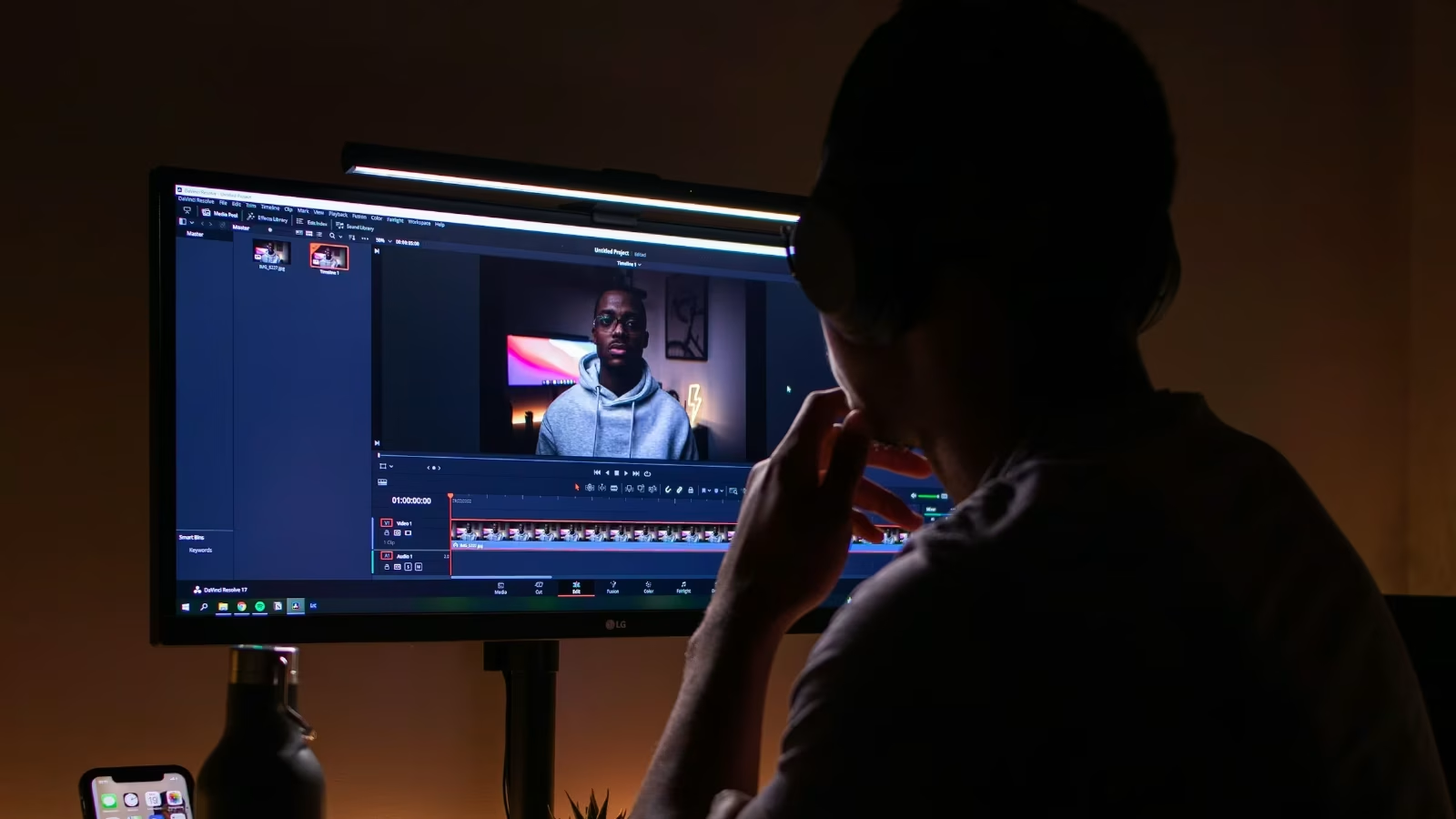
B2B companies invest heavily in video. Product walkthrough videos, customer testimonial films, executive interviews, webinar recordings, sales enablement content, brand documentaries — the average mid-market B2B company manages hundreds of video assets across its content library.
When those companies expand into new markets, that entire library arrives speaking only one language. And the cost of that single-language asset base compounds every quarter: sales teams in new territories don't have credible localized materials, marketing campaigns lack native-language video support, and prospects are being asked to evaluate a complex B2B solution while also doing translation work in their heads.
Localized video content isn't a luxury for B2B brands entering new markets. It's the infrastructure that makes market expansion actually work.
The B2B Video Localization Priority Stack
1. Product Demonstration Videos
Product demos are the closest thing to a virtual sales rep your content library contains. They're watched by prospects who are actively evaluating whether your solution solves their problem. A prospect who can watch a product demo in their own language, with culturally appropriate framing, is materially more likely to progress through the sales funnel. For SaaS and technology companies entering European, MENA, or LatAm markets, localizing the top 3–5 product demo videos should be the first localization investment — ahead of blog translation, social content, or paid media copy.
2. Customer Success and Case Study Videos
Social proof works in every market, but it works best when it's geographically and culturally proximate. A prospect in Germany is more persuaded by a German customer talking about your product than by an American customer saying the same thing in English subtitles. Localizing case study videos — and ideally producing new ones featuring local customers — is a high-return investment.
3. Webinar and Thought Leadership Content
Webinar recordings and long-form thought leadership videos build credibility with prospects in the research phase. Localized transcription and subtitling is the minimum; a dubbed or voice-over version with localized narration signals a serious commitment to the market and makes the content genuinely accessible.
4. Sales Enablement and Training Videos
Your local sales team and channel partners need materials they can actually use in customer conversations. Teams that operate with English-only materials in non-English markets consistently underperform against local competitors who have native-language support materials.
5. Brand and Culture Films
Brand films establish trust and emotional connection. For enterprise sales cycles where relationship trust is a significant factor in vendor selection, a localized brand film that a prospect can share with internal stakeholders in their own language has meaningful impact on deal velocity.
What Localization Means for B2B Video Beyond Translation
Cultural Register Alignment
B2B communication norms vary significantly by market. German business communication tends toward formal, precise, and substantive. Japanese business communication emphasizes relationship, deference, and long-term thinking. Gulf Arabic business culture values hospitality language and relationship framing before commercial specifics. A product demo that pitches in the direct, feature-forward American B2B style will land differently — often poorly — in markets where that register reads as pushy or unsophisticated. Culturally adapted localization adjusts not just the words but the rhetorical approach: the balance between relationship-building and feature-selling, formal versus informal address, and the tone of the call to action.
Regulatory and Industry Reference Adaptation
B2B content regularly cites industry standards and regulatory frameworks. A cybersecurity company talking about SOC 2 compliance is speaking to a US-centric standard. The European equivalent involves different frameworks like ISO 27001 and GDPR compliance posture. A localized version should reference locally relevant standards, not translate the US regulatory reference word for word.
Voice Talent Selection for Brand Credibility
The voice that narrates your localized content carries brand weight. In B2B contexts, a voice that sounds regional, unpolished, or poorly matched to the content's authority level undermines the credibility the content is trying to establish. Professional voice casting for B2B video localization should match the seniority, tone, and professional register of the original performance.
The Confidentiality Factor in B2B Video Localization
B2B video content often contains sensitive information: product roadmaps, unreleased feature demonstrations, customer data referenced in case studies, and pre-launch marketing materials. Before sharing any B2B video content for localization, verify that the vendor operates under a formal NDA, uses end-to-end encrypted file transfer, maintains strict access controls, and has a documented process for purging client files after project completion. Vendors who cannot clearly articulate their security practices are not appropriate partners for any content that hasn't been publicly released.
Measuring Market Entry Performance
- Demo video view-through rates by locale: Localized content consistently outperforms English-only on view completion in non-English markets.
- Sales cycle length by territory: Markets with fully localized sales enablement materials typically show faster sales cycles.
- Inbound lead quality from content channels: Prospects who engage with localized content before contacting sales are typically better qualified — the content has already educated and pre-sold them.
- Channel partner activation: Partners who have native-language support materials are measurably more active and effective than those who don't.
Starting Small, Scaling Intentionally
Few B2B companies can localize their entire video library for every target market simultaneously. Build a pilot program focused on the highest-priority market and highest-impact content types, measure results rigorously, and use those results to build the internal business case for expanding localization investment. The companies that get this right build localization thinking into their content production process from the beginning: designing scripts that localize cleanly, avoiding idioms that are expensive to adapt, building timing flexibility into narrated content, and maintaining production-ready source files. The global market for your B2B solution is larger than the English-speaking slice of it. Localized video content is how you access the rest of it.